

Last Updated: November 1, 2026
Quick Summary
Selling residential property in Dalzell SC follows a defined sequence: price against real comparable sales, prepare and market the home, negotiate offers, clear South Carolina disclosures, and close. Dalzell sits near Shaw Air Force Base, so many buyers are military families on compressed timelines who expect accurate photos, honest pricing, and fast answers.
- Build your comparable set from closed sales, matching square footage, bed and bath count, lot size, age, and garage capacity.
- Price at the middle of the comparable range rather than the top, since overpriced listings get skipped entirely.
- Work through repairs, deep cleaning, decluttering, and staging in that order before the first showing.
- South Carolina requires sellers to provide a residential property condition disclosure statement covering known material facts.
- Request a seller’s net sheet before listing to see what you keep under different offer scenarios.
Table of Contents
- Selling Residential Property in Dalzell SC: What the Process Looks Like
- How to Price a House for Sale in Dalzell
- Your Home-Selling Checklist Before the First Showing
- How Long Does It Take to Sell a House in Dalzell?
- Selling a House in Spring or Fall: Timing Your Dalzell Listing
- South Carolina Disclosures and Closing Requirements for Sellers
- Agent or For Sale by Owner? Costs, Net Proceeds, and What You Keep
- Selling Residential Property in Dalzell SC With Mike Walker
- Frequently Asked Questions
Selling Residential Property in Dalzell SC: What the Process Looks Like
Selling residential property in Dalzell SC follows a defined sequence: price against real comparable sales, prepare and market, negotiate offers, clear South Carolina disclosures, and close. This guide from Mike Walker SC Realtor walks through all seven steps.
Dalzell is a small community near Shaw Air Force Base, and that proximity shapes many home sales here. For a closer look at how Mike Walker works with buyers and sellers in this specific community, see Real Estate in Dalzell, SC.
Who Buys in Dalzell and What They Expect
Most Dalzell buyers fall into three groups: military families with orders to Shaw, first-time buyers priced out of larger metros, and local households upgrading or downsizing. Military buyers often work on a compressed schedule and lean on VA financing, which brings its own appraisal and property condition requirements.
They expect accurate listing photos, a price that reflects condition, and a seller who handles repair requests without drama. Homes that show well and are priced honestly move fastest.
Here is the sequence of steps the guide walks Dalzell sellers through.
| Step | What to do |
|---|---|
| 1 | Price against real comparable sales |
| 2 | Prepare and market the home |
| 3 | Negotiate offers |
| 4 | Clear South Carolina disclosures |
| 5 | Close the transaction |
How to Price a House for Sale in Dalzell
Pricing a house for sale starts with comparable sales, not with what you hope to net. Here is the sequence a Dalzell seller should work through before a list price goes live.
Step 1: Build the comparable set
Start with closed sales, not active listings, of homes that match yours on the features buyers actually pay for:
- Square footage within roughly 10-15% of your home
- Bedroom and bathroom count (a 3/2 and a 4/2 are not the same comp)
- Lot size and acreage, especially where one property backs to open land and another sits on a small subdivision lot
Then widen the radius only as far as the buyer pool would realistically travel. A buyer commuting to Shaw Air Force Base will consider a broader area than one anchored to a specific school zone.
Step 2: Adjust for condition, not for hope
Condition adjustments are where sellers routinely overprice. Buyers mentally subtract the cost of visible deferred maintenance from your asking price, usually more than the repair would cost. Fresh paint, a serviced HVAC, a newer roof, and updated kitchen and bath finishes move a home into a higher pricing tier than an identical floor plan that needs work.
List the upgrades you can document, permit records, receipts, warranty paperwork, because those become negotiating leverage later.
Step 3: Read the current market, not last year’s market
Closed sales tell you what buyers paid; they do not tell you what buyers will pay this quarter. Before you set a price, check:
- Days on market for comparable homes, rising DOM signals a softening price ceiling
- Active inventory at your price point, more competing listings means your home needs a sharper price or a better presentation
- List-to-sale price ratio, if nearby homes are closing below asking, your list price should anticipate that
Step 4: Account for the Shaw Air Force Base factor
Proximity to the base lifts demand in some pockets and adds noise in others. A house two streets over can carry a different buyer pool than one on the edge of town, because commute time, school zones, and neighborhood character shift block by block. Military buyers compare your home against every other listing within a short commute. To understand the buyer pool driving demand, see Homes Near Shaw AFB.
Step 5: Pressure-test the number before you list
Before the listing goes live, ask three questions:
- Would a buyer touring three similar homes choose mine at this price? If not, the price or the presentation has to change.
- What does the first two weeks of showing activity tell me? Strong showings with no offers usually means price; weak showings usually means marketing or photos.
- What is my walk-away number? Knowing your floor keeps you from accepting a weak offer out of fatigue or rejecting a fair one out of pride.
The mistake to avoid
The single most expensive pricing error is treating an asking price as a wish rather than a forecast. Your list price predicts what an informed buyer will pay after comparing your home to every alternative. The closer that prediction is to reality, the faster the sale and the less likely you are to chase the market downward with repeated price cuts.
Your Home-Selling Checklist Before the First Showing
A home-selling checklist protects your price before the first buyer walks in. Work through repairs, deep cleaning, decluttering, and staging in that order, then handle photography and marketing copy last.
- Fix the small stuff: leaky faucets, sticking doors, burned-out bulbs
- Service HVAC and water heater; keep receipts for buyer questions
- Deep clean floors, grout, windows, and appliances
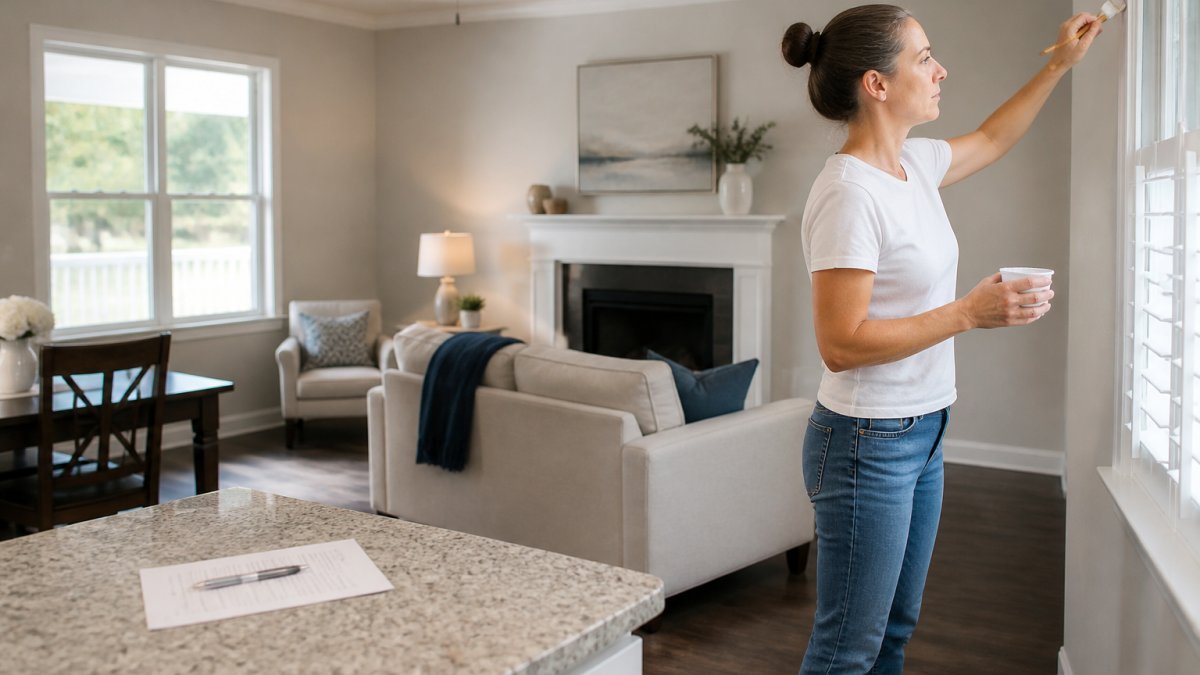
A common mistake is skipping the boring repairs and spending the budget on decor. Buyers forgive dated furniture. They do not forgive a water stain on the ceiling.
How Long Does It Take to Sell a House in Dalzell?
How quickly a Dalzell home sells depends on price, condition, and season. Well-priced homes in good condition draw showings quickly; overpriced listings sit while buyer interest cools.
Timeline depends on four levers: asking price relative to comparable sales, property condition, marketing reach, and flexibility on possession dates. Military buyers with orders often need to close fast, and a seller who can accommodate a short timeline gains an edge.
Track days on market from week one. If showings are steady but offers are not, the price is the issue. If showings are scarce, the marketing or photos are the problem.
Selling a House in Spring or Fall: Timing Your Dalzell Listing
Spring and fall each bring different advantages. Spring delivers the largest pool of buyers, including families timing a move around the school year.
Summer can work well for military relocations, since orders arrive on a rolling schedule. Winter is slower, but serious buyers who show up then are rarely browsing for fun.
The right season depends on your property type. A family home near schools peaks in spring.
South Carolina Disclosures and Closing Requirements for Sellers
South Carolina requires sellers to provide a residential property condition disclosure statement covering known material facts about the property. Sellers must disclose what they know; the form does not replace inspections, and buyers still hire their own.
Closing involves a title search, a settlement statement, and recorded transfer documents. The South Carolina Real Estate Commission publishes the disclosure forms and licensing rules that govern the transaction, and the Consumer Financial Protection Bureau’s closing guide explains the settlement statement buyers and sellers sign at the table.
Watch out: incomplete or vague disclosures are the most common source of post-closing disputes. Fill the form out honestly and completely, and keep records of any repairs you make before listing.
Agent or For Sale by Owner? Costs, Net Proceeds, and What You Keep
Selling for sale by owner can save the listing commission, but it shifts pricing, marketing, negotiation, and paperwork onto you. Net proceeds, not gross sale price, is the number that matters, and FSBO sellers often discover the gap closes once they account for their own time and pricing mistakes.
What actually comes out of your sale proceeds
A seller’s net proceeds are the sale price minus the costs of selling. The categories are consistent across most residential transactions, even when the specific amounts vary:
- Real estate commissions, the listing side and, typically, the buyer’s agent side. Commission rates are negotiable and set by agreement, not by law.
- Seller closing costs, title search and title insurance, settlement or escrow fees, recording fees, and attorney fees where applicable
- Transfer taxes and documentary stamps, state and, where applicable, local charges tied to recording the deed
Because these vary by transaction, request a seller’s net sheet from your agent or closing attorney before you list. A net sheet estimates each line item against your expected sale price so you can see what you keep under different offer scenarios.
The FSBO trade-off in plain terms
FSBO is not free, it is a different allocation of cost and risk. Skipping the commission has costs of its own:
- Pricing risk, without comparable sales analysis, FSBO sellers commonly misprice in one direction or the other, and a mispriced home costs more in lost time and reduced offers than the commission saved
- Marketing cost and reach, professional photography, listing syndication, signage, and paid placement come out of your pocket, and limited exposure narrows the buyer pool
- Negotiation exposure, inspection requests, appraisal gaps, and repair demands are where inexperienced sellers give away the most, often without realizing it
When FSBO makes sense, and when it doesn’t
- Best for FSBO: sellers with recent local transaction experience, a flexible timeline, a home that is easy to show, and the time to manage marketing and negotiation themselves
- Best for an agent: sellers who need pricing accuracy, marketing reach, and someone to manage inspections, appraisals, and closing deadlines, especially when the buyer has orders and a hard move date
How to compare the two paths
Ask for a written net sheet under both scenarios: one assuming you sell with representation, one assuming you sell on your own at a realistic FSBO price. You can also review Selling Your Home in Sumter, SC for pricing and complete transaction handling. Compare the bottom line, not the top line. Then weigh the non-dollar factors, time, risk, and the likelihood of a smooth closing.
Selling Residential Property in Dalzell SC With Mike Walker
Selling residential property in Dalzell SC rewards sellers who price accurately, prepare thoroughly, and keep the transaction moving.
That background matters when your buyer has orders. Mike handles PCS timelines and VA loan requirements, and he stays the single point of contact from start to finish.
If you are ready to talk through pricing, preparation, and timing, get in touch with Mike Walker for honest answers about your property.
Frequently Asked Questions
How do I sell a house in Dalzell, SC?
Start by getting a realistic valuation from recent comparable sales in Dalzell and nearby Sumter neighborhoods, then complete repairs and staging before listing. Once your South Carolina disclosure paperwork is in order, you market the home, review offers, negotiate, and move through inspection and closing.
What documents do I need to sell a house in South Carolina?
South Carolina requires a residential property condition disclosure statement, plus a clear title and any HOA or easement documents that apply to your lot. You will also sign the listing agreement, the purchase contract, and closing settlement paperwork. If the home was inherited or is part of an estate, expect additional affidavits.
Should I sell my home myself or work with a real estate agent in Dalzell?
For sale by owner can save on commission, but it puts pricing, marketing, showings, negotiation, and South Carolina disclosure compliance on you. Dalzell buyers, including military families on tight PCS timelines, often expect professional listing photos and fast responses.
How long does it take to sell a house in Dalzell?
Timeline depends on price, condition, and season. Well-priced homes in Dalzell and the surrounding Sumter area can go under contract within weeks, while overpriced listings sit and accumulate days on market. If you are on PCS orders, tell your agent your deadline up front so pricing and marketing are built around it.
Dalzell sellers face a market shaped by military timelines and local buyer expectations, and guessing at price or skipping disclosures costs real money. Mike Walker SC Realtor brings four decades of local knowledge, veteran-owned perspective, and end-to-end transaction management, including clear pricing strategy, professional marketing, and guidance on VA loans and PCS timelines. Get started with Mike Walker SC Realtor and sell your Dalzell property with a plan instead of a guess.
