
Last Updated: November 5, 2026
Quick Summary
To buy a home in a flood zone safely, check the property’s zone on the FEMA Flood Map Service Center before making an offer. Then ask for flood history and any elevation certificate, and get firm flood insurance quotes before you commit. A property in a high-risk zone with a federally backed loan will usually need flood insurance for the life of the loan.
- Search the exact address in the FEMA Flood Map Service Center to find the zone letter.
- Ask the seller for any elevation certificate on file.
- Zone A and Zone V are high-risk zones that usually require flood insurance with a federally backed mortgage.
- Request the seller’s flood history answers in writing and verify them against permit records.
- Bind your flood policy before closing day so the lender can clear the loan.
Table of Contents
- Why Flood Zones Change the Home Buying Process
- How to Check Flood Zones Before Buying a House
- Understanding FEMA Flood Maps and Zone Designations
- Flood Insurance Requirements for Homes in Flood Zones
- Flood History Disclosure When Buying a Home
- Buying a Home in Flood Zones: Pros and Cons
- Your Flood Zone Due Diligence Timeline, From Search to Closing
- Frequently Asked Questions
Why Flood Zones Change the Home Buying Process
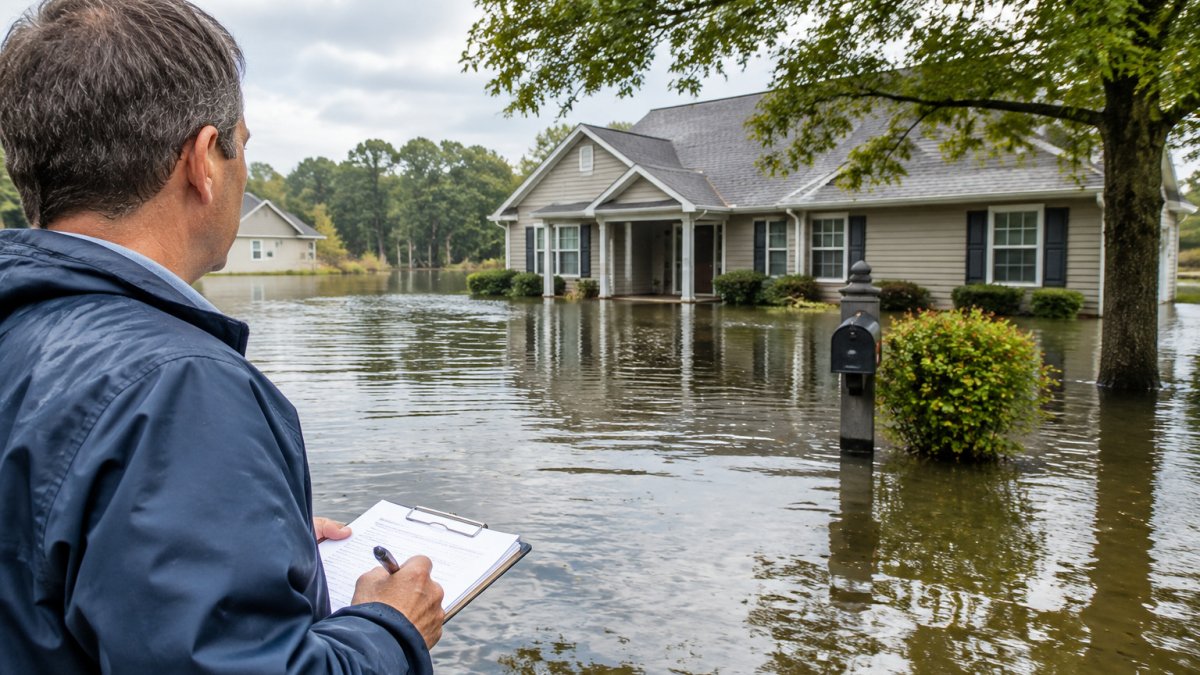
Buying a home in a flood zone adds steps that most buyers never see. The property may look perfect, but its location on a federal flood map can change your insurance costs, your loan options and your long-term budget. Buyers in Sumter benefit from understanding these factors before they make an offer.
A flood zone is a area that the Federal Emergency Management Agency (FEMA) has mapped as having a set chance of flooding in a given year. Lenders check this map for every property they finance. If a home sits in a high-risk zone, the lender will usually require flood insurance before the loan closes.
Flood zones matter in three main ways:
- Insurance: Homes in high-risk zones often need a flood policy, and that policy adds to your monthly cost.
- Financing: Federally backed loans, including VA loans, have specific flood insurance rules that must be met.
- Resale: Flood risk can affect how easily you sell the home later and what buyers will offer.
Many buyers learn about flood risk too late.
How to Check Flood Zones Before Buying a House
Checking the flood zone is a simple, free step that you can do before you make an offer. Buyers looking near Shaw Air Force Base can also read our guide to buying near Shaw AFB, which covers neighborhoods and financing options for that area.
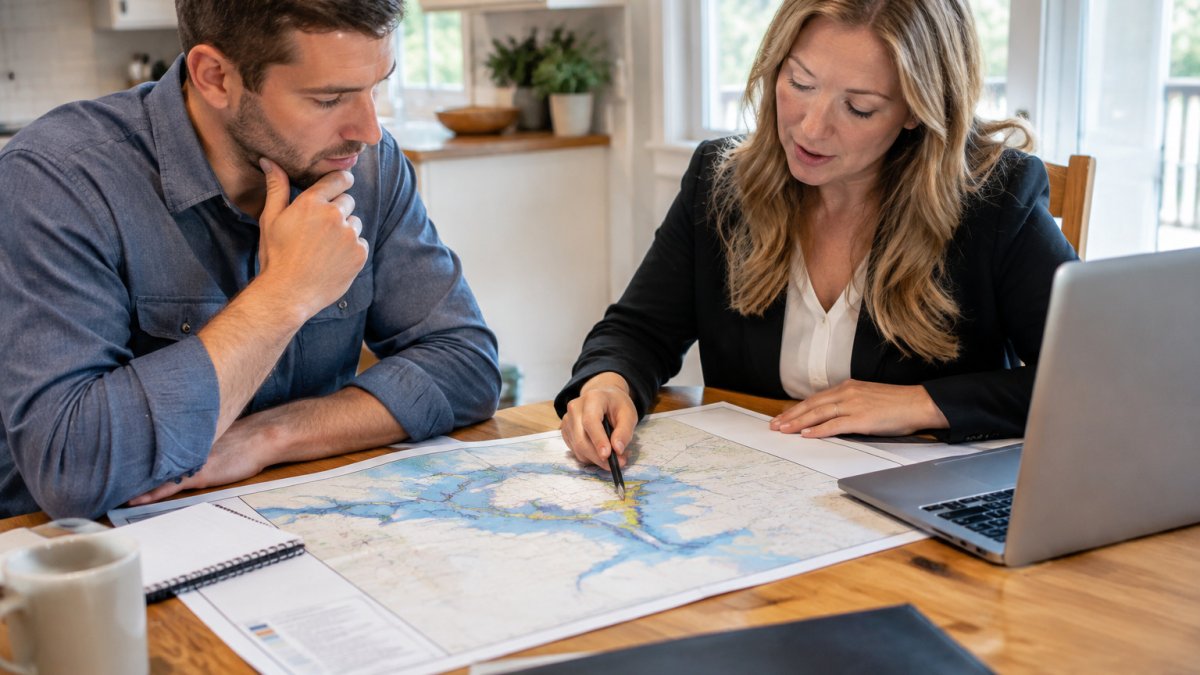
A homebuyer and a real estate agent reviewing a printed flood map together at a kitchen table, with a laptop open beside them.
Here is a quick process to follow:
- Enter the exact property address into the FEMA map search tool.
- Note the zone letter shown for the parcel (for example, “AE” or “X”).
- Ask the seller or listing agent for any elevation certificate on file.
- Check the local county or city planning office for any map updates.
Watch out: Maps can be revised, so a zone that looked safe a few years ago may now be in a higher-risk area.
Understanding FEMA Flood Maps and Zone Designations
FEMA flood maps, formally called Flood Insurance Rate Maps (FIRMs), divide land into zones based on modeled flood risk. Each zone letter tells you the estimated annual chance of flooding and whether a lender will require insurance. But the zone letter is a starting point, not a verdict on the house.
High-risk versus moderate- and low-risk zones
High-risk zones, such as Zone A and Zone V, carry at least a 1 percent chance of flooding in any given year, commonly called the 100-year floodplain (Emergency Management Institute – Independent Study (IS) Course). Zone V adds wave action along coastlines. Properties in these zones usually need flood insurance if they carry a federally backed mortgage.
Moderate- and low-risk zones, such as Zone X, face a lower modeled chance of flooding. Insurance is not required in these areas, but it is still available and often worth pricing.
Why the zone label may not describe your whole parcel
A FIRM panel assigns a zone to mapped areas, not to a single address. A parcel can straddle two zones, and the building footprint may sit in a different zone than the driveway, the back acre, or the lot next door. The map also does not show the first-floor elevation of the structure.
What maps can establish: the mapped zone for a location, the base flood elevation (BFE) shown on the panel, and whether the property is in or out of the Special Flood Hazard Area.
Reading a FIRM panel like a buyer
- Open the FEMA Flood Map Service Center and search the exact address.
- Note the panel number and effective date, an older effective date means a revision may be pending.
- Zoom to the parcel and compare the building footprint to the zone boundary line.
- Record the BFE if one is shown for the panel.
- Ask the seller or listing agent for the elevation certificate, which documents the lowest floor elevation relative to the BFE.
Watch out: A seller’s statement that the home is “not in a flood zone” may refer to the loan’s flood determination rather than the map itself, ask for the actual determination document and the panel it references.
Flood risk beyond the mapped zone
A property outside a high-risk zone can still flood. Heavy rain, poor drainage, undersized culverts, and storm runoff cause problems even where the map shows low risk. A common pattern is that properties just outside the mapped boundary, sometimes called the 500-year floodplain or shaded Zone X, still file claims after intense storms.
Walk the lot and look at the slope of the yard, nearby creeks, retention ponds, and the direction water would travel toward the foundation. Those details often tell you more about day-to-day risk than the zone letter alone.
Flood Insurance Requirements for Homes in Flood Zones
If a home sits in a high-risk zone and you use a federally backed loan, your lender will require flood insurance for the life of the loan. This is a condition of the mortgage, not an optional extra.
Flood insurance is usually purchased through the National Flood Insurance Program (NFIP) or a private insurer. Our VA loan appraisal guide explains how appraisers consider property value and what to expect if the appraisal comes in low.
Insurance premiums depend on the home’s elevation relative to the base flood elevation, the age of the home and the coverage amount.
Flood History Disclosure When Buying a Home
Many states require sellers to disclose known flood damage on a standard property disclosure form, but the form varies widely and sellers sometimes answer narrowly. Treat the disclosure as one input, not the final word, and verify it against records.
A practical flood history checklist
- Seller disclosure form: Read every flood-related question and note any “unknown” or blank answers, those deserve a follow-up in writing.
- Insurance claims history: Ask your insurance agent whether a loss history report (often called a CLUE report) is available for the address, and request prior flood claims through the NFIP or the current carrier where permitted.
- Permits and repair records: Check the local building department for permits tied to water damage, foundation repair, or elevation work. Unpermitted repairs are a red flag.
- Elevation certificate: If one exists, confirm the lowest floor elevation and whether it reflects current conditions or an older renovation.
- Utility and remediation invoices: Ask for receipts from water extraction, mold remediation, or sump pump installation.
- Neighbor and HOA context: Ask whether the street, common areas, or retention ponds have flooded, and whether the HOA has records of drainage complaints.
Getting answers in writing
Ask the seller directly whether the home has flooded, received water intrusion, or filed an insurance claim for flood damage, and request the answer in writing, even a simple email reply creates a record. If the seller declines, note that in your file and factor it into your offer.
Watch out: A clean disclosure does not guarantee a clean history. Claims may have been filed by a prior owner, repairs may have been done without permits, and some events never generated a claim. Cross-check the disclosure against permit records and any loss history you can obtain.
What the records can and cannot tell you
Claims and permit records show what was reported and repaired, not what was missed. A home that flooded once and was properly remediated may be a better risk than one with no claims but obvious drainage problems. Use the records to ask better questions of your inspector and insurance agent, and build the answers into your offer price and your insurance budget before you commit.
Buying a Home in Flood Zones: Pros and Cons
Buying in a flood zone is not automatically a bad choice. Some buyers find good value in these areas, while others decide the risk is too high. Weigh both sides before you decide.
Pros:
- Lower purchase prices can make homeownership more affordable.
- Some flood-zone homes sit near lakes, rivers or green space that buyers value.
- Mitigation work, such as raising the home or improving drainage, can reduce risk.
Cons:
- Flood insurance adds a steady monthly cost for as long as you own the home.
- Coverage limits may not fully pay for flood damage.
- Resale can be harder, and some buyers will avoid the property or offer less.
Talk with a licensed agent and an insurance professional before you commit. A clear cost comparison over five to ten years often makes the decision easier.
Your Flood Zone Due Diligence Timeline, From Search to Closing
Planning ahead keeps a flood-zone purchase on schedule. Use this timeline as a guide, especially if you have a VA loan or a tight move date.
- Week 1, Search: Check the FEMA map for every home on your list. Remove any property that falls in a zone you cannot accept.
- Week 2, Offer: Ask the seller for flood history and any elevation certificate. Build the insurance estimate into your offer price.
- Weeks 3 to 4, Inspection and Insurance: Order a home inspection that includes drainage and foundation review. Get firm insurance quotes from at least two providers.
- Weeks 5 to 6, Appraisal and Loan: Your lender orders an appraisal. Confirm the final flood insurance requirement with your lender.
- Final Week, Closing: Bind your flood policy before closing day so the lender can clear the loan.
If you are moving on military orders, share this timeline with your lender early so the VA loan steps stay on track. Mike Walker SC Realtor can help you build a schedule that fits your move date. Book a free 15-minute relocation call to plan your flood zone checks and closing steps.
Frequently Asked Questions
Is it a bad idea to buy a house in a flood zone?
Not necessarily. A home in a Special Flood Hazard Area can be a sound purchase if you budget for flood insurance, confirm the property’s elevation, and review its flood history. The main risks are higher insurance premiums and the chance of uninsured losses. Compare the total monthly cost, including insurance, against the home’s price and your long-term plans before deciding. Many buyers in flood zones find the trade-off reasonable once the numbers are clear.
How do I check whether a home is in a flood zone before I buy?
Start with the FEMA Flood Map Service Center, where you can search by address and view the official flood zone designation. Then ask your agent or lender for the flood determination, which the lender is required to order for federally backed mortgages. Confirm the result against the property’s elevation certificate if one exists. Checking early, before you make an offer, gives you time to adjust your budget or walk away.
What should I ask the seller about a home’s flood history?
Ask whether the home has experienced flooding, water intrusion, or storm damage, and whether any claims were filed with an insurer or the National Flood Insurance Program. Request any prior repair records, remediation invoices, and mitigation work such as elevation or floodproofing. Review any seller disclosure form closely and ask follow-up questions about anything unclear.
Does a flood zone affect my mortgage and insurance requirements?
Yes. If the property is in a high-risk zone and you use a federally backed mortgage, your lender will generally require flood insurance. Premiums vary widely based on the property’s zone, elevation, and coverage limits, so get quotes from several insurers before you finalize your budget. Private flood insurance may also satisfy the requirement if it meets the lender’s standards.
Buying in a flood zone is manageable when you check early, compare insurance quotes and read the disclosure records. Mike Walker SC Realtor brings over 40 years of local experience in Sumter, SC, and a veteran’s understanding of military relocations. Contact Mike Today to talk through your next step with a trusted local guide.
